
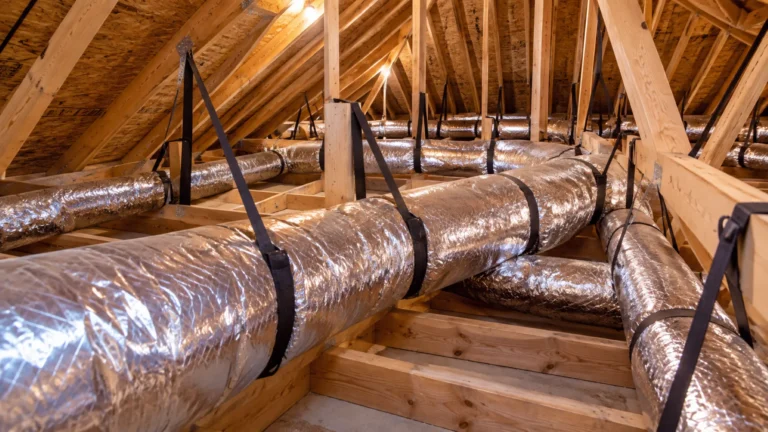
What Duct and Pipe Wrap Insulation Does
Wrap insulation is applied around ductwork, pipes, and mechanical components to slow temperature transfer between what is inside them and the space around them. Ducts running through an unconditioned attic are the most common application.
The material matters less than the coverage. A duct wrapped with gaps at the joints and seams performs closer to an unwrapped duct than a properly sealed one, which is why seam and joint detail is the whole job.
Who Is This Service For?
Wrap insulation suits properties and projects with exposed mechanical systems.
- Homes with ductwork running through the attic
- Commercial mechanical installations
- New construction and tenant improvements
- Renovations exposing existing ductwork
- Contractors working to a mechanical specification
What to Expect From
a Duct Wrap Installation
The system is assessed first, including duct runs, existing wrap condition, and access to the areas needing coverage. On construction projects, the specification determines the material and R-value rather than a general recommendation.
Installation focuses on continuous coverage, with particular attention to joints, bends, and terminations where wrap most commonly fails.
How the Work Is Carried Out
Here is the sequence on a typical wrap installation.
System assessment
Duct runs, sizes, and existing wrap condition are reviewed before scope is confirmed.
Material selection
Foil wrap, FSK wrap, or pillow wrap is chosen to suit the application and any specification.
Removal of failed wrap
Existing material that has torn, slipped, or degraded is removed rather than wrapped over.
Continuous application
Wrap is applied along the run with attention to overlap so coverage stays unbroken.
Seam and joint sealing
Seams, bends, and terminations are sealed, since these are the most common failure points.
Cleanup
Offcuts and packaging are removed and the work area is cleared.
How Duct Wrap Insulation May Help Your Property
Insulating ductwork may reduce how much temperature is lost between the equipment and the rooms it serves. In attics that reach high temperatures through summer, uninsulated ducts sit directly in that heat.
Whether the difference is noticeable depends on how much duct runs through unconditioned space and the condition of the existing wrap.
What Property Owners Commonly Notice
These are the outcomes reported most often after duct wrap work.
- Better delivery temperatures at the vents — Reducing loss along the run may improve what actually reaches the room.
- Support for energy efficiency — Systems may work less hard when less temperature is lost in transit.
- Reduced condensation risk — Correctly wrapped and sealed ducts may reduce surface condensation in humid conditions.
- A tidier mechanical installation — Consistent wrap and sealed seams make the system easier to inspect.
- Specification compliance — On construction projects, wrap installed to the mechanical spec is what gets signed off.
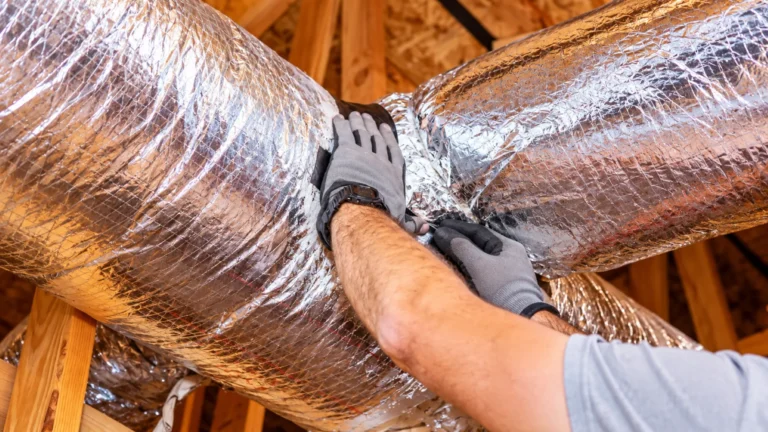
Duct and Pipe Wrap at Torres Insulation Inc.
Wrap work is judged at the joints. Long straight runs are simple, but bends, take offs, and terminations are where coverage tends to be rushed and where performance is lost.
Installations are carried out with those points in mind, and existing wrap that has failed is removed rather than covered over.
On construction projects, the mechanical specification drives material and R-value selection. Drawings can be submitted directly so the bid reflects the documented scope.
Common Questions About Duct and Pipe Wrap Insulation
What is FSK wrap insulation?
FSK wrap is a faced insulation product commonly used on ductwork and mechanical systems in commercial and residential applications. The facing provides a finished surface over the insulation layer. Whether it suits your project usually depends on the mechanical specification.
Should ductwork in the attic be insulated?
Ducts running through an unconditioned attic sit in whatever temperature that space reaches, which in Southern California can be considerable through summer. Insulating those runs may reduce how much temperature is lost before air reaches the room. Existing wrap should also be checked, since older material often tears or slips over time.
What is the difference between foil wrap and pillow wrap?
The products differ in construction and facing, which affects where each is typically applied. Selection generally follows the application and any specification the project has to meet rather than personal preference. The right option for your system is confirmed during the estimate.
Can damaged or slipped duct wrap be replaced?
Yes, and failed wrap is usually removed rather than covered with new material. Torn, slipped, or degraded sections leave the duct effectively uninsulated at those points. The system is assessed so the scope covers what actually needs attention.
Do you install duct wrap on commercial projects?
Yes, commercial mechanical work is part of the service alongside residential ductwork. On specified projects the material and R-value follow the mechanical drawings. Plans can be submitted directly for a bid against the documented scope.
Get a Free Estimate for Duct Wrap Insulation
If ductwork is running uninsulated through a hot attic, or wrap has torn and slipped over the years, an assessment will tell you what is worth doing. The estimate is free.