
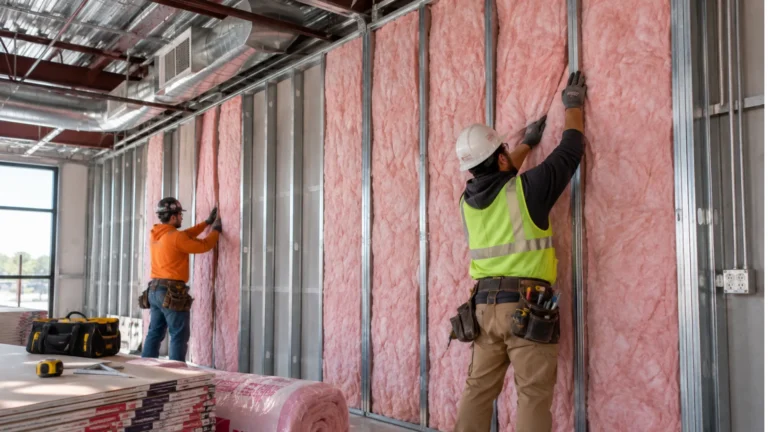
What Commercial Insulation Work Involves
Commercial insulation follows a specification rather than a recommendation, which changes the nature of the job. The material, R-value, and assembly are usually already decided by the time a subcontractor is brought in.
What the contractor actually controls is scheduling, installation quality, and inspection outcome. The 95% first-inspection pass rate the company reports is the metric that most directly affects your programme.
Who Is This Service For?
Commercial insulation suits project-driven work rather than one-off upgrades.
- General contractors and builders
- Commercial property owners
- Developers and project managers
- Tenant improvement projects
- Property managers with multiple buildings
Commercial Insulation Services Available
Across Southern California
Scope is priced from drawings wherever they exist, since a documented specification produces a firmer bid than a walkthrough description. Anything ambiguous is raised as a question rather than priced as an assumption.
Several insulation systems are installed in house, which means the bid can follow the specification rather than steering toward one preferred material.
Systems Installed on Commercial Projects
Material selection follows the drawings and the assembly.
Fiberglass and batt insulation
Standard cavity systems across walls, ceilings, and floor assemblies.
Mineral wool batts
Specified where fire performance or acoustic separation forms part of the assembly.
Rigid board insulation
Continuous insulation layers across walls, roofs, and deck assemblies.
Spray foam insulation
Open and closed cell applications where sealing or performance per inch is specified.
Blown-in insulation
Loose fill where the assembly and access suit it.
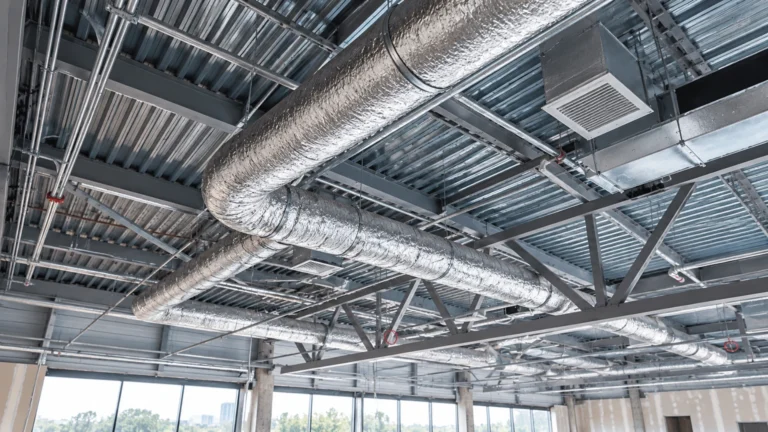
Duct and pipe wrap
Foil wrap, FSK wrap, and pillow wrap on mechanical systems.
How the Right Insulation Subcontractor May Protect Your Programme
Insulation sits between rough-in sign off and drywall, which means a delay there pushes every trade behind it. Reliable scheduling may protect the sequence more than any saving on the bid itself.
Inspection performance works the same way. An installation that passes first time avoids the rework, reinspection, and lost days that a failure introduces.
What Contractors Value on These Projects
These are the factors that come up most often on commercial work.
- Scheduling that holds — Dates are confirmed before crews are committed rather than after.
- A strong inspection record — The company reports a 95% first-inspection pass rate across its projects.
- Bids priced from drawings — Documented scope produces a firmer number and fewer variations later.
- Multiple systems in house — The specification can be followed without substituting toward one material.
- Clean site conduct — Debris is contained and removed so following trades are not working around it.
Commercial Insulation at Torres Insulation Inc.
Communication runs directly on these projects, which matters when a scope question needs answering the same day rather than the following week. The business is family owned, so the person quoting the work is connected to the crew delivering it.
Site conduct is treated as part of the contract rather than a courtesy. Work areas are protected, debris is bagged and removed, and areas are cleared before handover to the next trade.
Torres Insulation has worked with commercial and residential customers since 2020 across Los Angeles County, Orange County, and areas near Riverside.
Common Questions About Commercial Insulation
Do you bid commercial insulation from construction drawings?
Yes, and bidding from drawings is the preferred route because it produces a firmer number. Plans can be submitted directly for review, including architectural drawings and the insulation specification. Anything ambiguous is raised as a question rather than priced as an assumption.
What types of commercial buildings do you work on?
Work covers commercial construction, tenant improvement projects, and building upgrades across the Southern California service area. Specific capability should be confirmed against your particular project scope and size. Send the drawings and the fit can be assessed directly.
How do you coordinate with other trades on a commercial project?
Insulation is scheduled around framing, rough-in sign off, and the trades following behind. Dates are confirmed before crews are committed, and changes are communicated rather than discovered on site. Quick turnaround is treated as part of the service rather than an added extra.
What happens if the insulation fails inspection?
The company reports a 95% first-inspection pass rate across its projects. Installations are built to the specification the inspector will be checking rather than to a general standard. Where something does need attention, it is addressed so the programme can continue.
Do you handle tenant improvement insulation work?
Tenant improvement projects are part of the commercial scope alongside new construction. These jobs often involve working around occupied areas and existing services, which affects sequencing. Specific capability for your project should be confirmed when the scope is reviewed.
Other Services
Send Your Drawings for a
Commercial Insulation Bid
If insulation is coming up on your programme, the useful next step is a real number against the actual specification. Submit the plans and the bid will reflect what is drawn.