
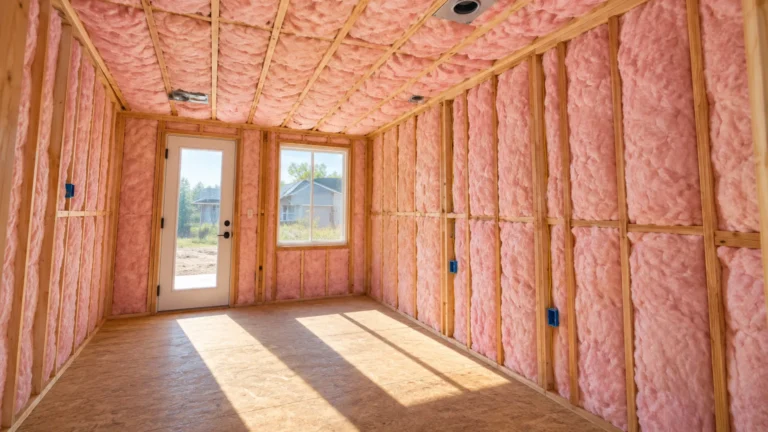
Why Insulation Matters More in a Small Unit
Small structures respond to temperature faster than large ones, because there is less mass and a higher ratio of exterior surface to interior space. An ADU that is under-insulated tends to overheat quickly rather than gradually.
There is also the inspection to consider. Insulation on an ADU is inspected before drywall closes it in, and correcting it afterwards means opening the wall back up.
Who Is This Service For?
ADU insulation suits any project adding a self-contained living space.
- Garage conversion projects
- Detached backyard units
- Attached additions and extensions
- Homeowners building a rental unit
- Contractors managing ADU builds
What ADU Insulation Work Covers
Scope depends on the structure, since a garage conversion presents different conditions from a new detached build. Existing garages in particular often need attention to walls, ceiling, and floor assemblies that were never designed for occupancy.
Work is scheduled after framing and rough-ins are complete, so material can be fitted properly before drywall goes up.
What Gets Insulated in a Typical ADU
Coverage generally spans the full envelope rather than one assembly.
Exterior walls
Batt or spray foam insulation fitted to the specified R-value for the wall assembly.
Ceiling or roof assembly
Insulation to the required value, using spray foam where cavity depth is limited.
Floor or subfloor
Insulation beneath raised floors or over slabs where the assembly calls for it.
Party walls on conversions
Insulation between the ADU and the main structure for temperature and sound separation.
Ductwork
Wrap on any mechanical runs passing through unconditioned space.
How Proper ADU Insulation May Improve the Finished Unit
Insulating the full envelope properly may make the difference between a unit that holds temperature and one that needs constant cooling to stay usable. That matters more when the unit is rented, since running costs land on someone every month.
Sound separation is worth considering too, particularly on conversions where the ADU shares a wall with the main house.
What Owners and Builders Commonly Notice
These are the outcomes that come up most often on ADU projects.
- A unit that holds temperature — Full envelope coverage may reduce how quickly a small space overheats.
- Support for lower running costs — Better insulation may reduce how hard a small cooling system has to work.
- Sound separation on conversions — Insulated party walls may reduce noise transfer between the ADU and the main house.
- Inspection readiness — Correct R-values and coverage are what the inspector will be checking before drywall.
- Fewer surprises after handover — Comfort problems in a finished unit are expensive to correct retrospectively.
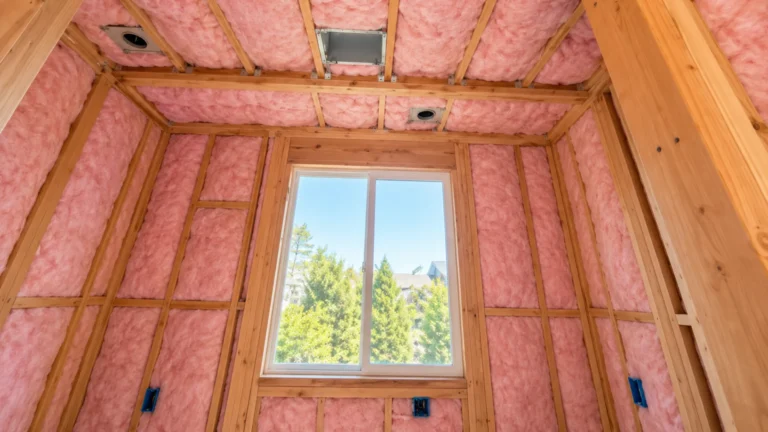
ADU Insulation at Torres Insulation Inc.
ADU projects usually run to a tight programme with several trades queuing behind one another. Insulation that slips pushes drywall, and drywall pushes everything after it, which is why scheduling reliability matters as much as the installation itself.
Several insulation systems are installed in house, which is useful on ADUs where cavity depth varies between assemblies. Spray foam often suits a shallow roof assembly while batts handle the walls.
The company reports a 95% first-inspection pass rate across its projects, and drawings can be submitted directly so the bid reflects the documented scope.
Common Questions About ADU Insulation
What insulation is required for an ADU in California?
Requirements are set by the applicable building and energy code for your project, and the drawings usually state the R-values needed for each assembly. Different values typically apply to walls, ceilings, and floors. The specification for your project is confirmed before material is ordered.
Do garage conversions need to be fully insulated?
Garage conversions generally require insulation across the full envelope, since garages were not built for occupancy. Walls, ceiling, and often the floor assembly all need attention. The specific requirements depend on your approved plans.
When should insulation be installed during an ADU build?
Insulation goes in after framing, electrical, and plumbing rough-ins are complete but before drywall closes the cavity. It is usually inspected at this stage, which is why the sequence matters. Scheduling is coordinated around the other trades so the programme holds.
Should I use spray foam or batt insulation in my ADU?
Both are commonly used, and many ADUs end up with a mix depending on the assembly. Spray foam is often chosen for shallow roof assemblies where reaching the required R-value in limited depth is the challenge, while batts suit standard wall framing. The recommendation follows the drawings and the cavity depths available.
Can you quote ADU insulation from my approved plans?
Yes, and quoting from plans produces a firmer number than a description. Submit the drawings including the insulation specification and the bid will cover the documented scope. Anything unclear is raised as a question rather than assumed.
Other Services
Get Your ADU Insulation
Quoted From the Plans
If your ADU is heading toward the insulation stage, the useful step is a bid against what has actually been approved. Send the drawings and the estimate is free.