
What Attic Insulation Involves
Attic insulation slows heat moving between the roof space and the rooms below, which makes it the single most influential surface in most Los Angeles homes. The material can be loose fill blown across the attic floor, batts fitted between joists, or spray foam applied at the roof deck.
The variable that decides performance is depth, and depth is what changes over time. Loose fill compresses steadily across decades, so an attic installed at R30 in the 1970s may measure closer to R19 today.
Who Is This Service For?
Attic insulation suits Los Angeles properties across most age brackets and conditions.
- Homeowners with upstairs rooms that stay hot — Rooms directly below the attic are usually the first to show the problem.
- Owners of pre-1980 homes — Properties from this period commonly hold insulation that has settled well below its original rating.
- Anyone with visible joists in the attic — Seeing the framing usually means depth has dropped below where it should be.
- Landlords and property investors — Comfort complaints and running costs both trace back to attic performance.
- Homeowners planning a renovation — Attic work is easier before other trades are on site.
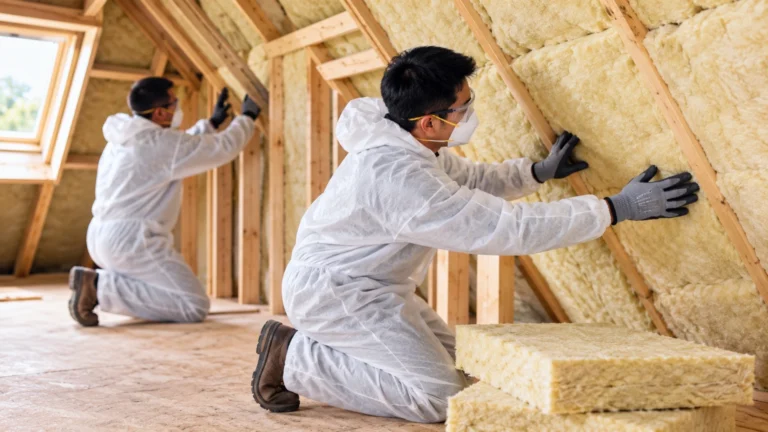
What Attic Insulation Covers for Los Angeles Homes
Every project starts with someone going into the attic and measuring, because the right scope depends on current depth and the condition of the existing material. You are told what the attic measures now and what it should be running at, before any pricing is discussed.
Access is assessed at the same time, which matters in a city with as many hillside and non-standard properties as this one.
What the Assessment Covers
The assessment establishes the scope rather than confirming a price already decided.
- Current depth measurement — Depth is checked across the attic rather than at the hatch, since coverage is rarely uniform.
- Material condition — Insulation is checked for moisture, pest disturbance, and compression from storage.
- Structural observations — Roof leaks, damaged framing, and gaps in the deck are flagged where visible.
- Ventilation and clearances — Vents and fixtures needing clearance are identified before material is specified.
- Access review — Attic entry, working height, and route through the property all affect how the job runs.
What the Installation Includes
Once the scope is agreed, the work follows a consistent sequence.
- Property protection — Access routes and floors are covered before anyone goes up.
- Removal where required — Material that is wet, contaminated, or badly degraded is bagged and taken out first.
- Installation to target R-value — New material is installed to an agreed depth, commonly between R30 and R49.
- Full footprint coverage — Material is worked toward the eaves rather than concentrated near the access point.
- Depth verification — Coverage is checked across the space as work progresses.
- Cleanup and walkthrough — The area is cleared and you are shown what was installed and where.
How Attic Insulation May Benefit Your Los Angeles Home
Restoring attic depth may reduce how much heat transfers into the rooms below during the hottest part of the day. Homeowners most often describe the change in terms of a specific room becoming usable again rather than in energy figures.
How much difference you notice depends on how far below standard the attic currently sits, which is exactly what the assessment establishes.
What Los Angeles Homeowners Commonly Report
These are the outcomes that come up most often after attic work.
- Cooler upstairs rooms — Restoring depth may reduce the heat load coming down through the ceiling.
- Smaller gaps between rooms — Even coverage may narrow the difference between the warmest and coolest parts of the home.
- Support for energy efficiency — Cooling systems may run less when the attic is doing its job.
- A cleaner attic space — Removal and cleanup often improve the condition of the space itself.
- Confidence at inspection — Correct depth and coverage are what an inspector checks on attic work.
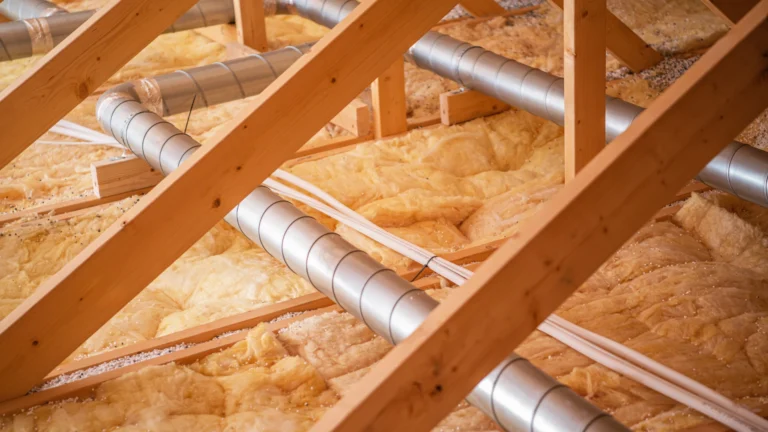
Attic Insulation at Torres Insulation Inc.
Attic work is invisible once the hatch closes, which is why so much of it is done poorly. Material piled near the access point and thinning toward the eaves looks complete from below and performs like a partially insulated attic.
Coverage is verified across the footprint rather than sampled at the entry, and vents and clearances are maintained as the work progresses. The company reports a 95% first-inspection pass rate across its projects.
Cleanliness is treated as part of the job rather than a courtesy. Access routes are protected before anyone goes up, debris is bagged rather than carried loose through the property, and the space is cleared before the crew leaves.
Common Questions About Attic Insulation in Los Angeles
How much does attic insulation cost in Los Angeles?
Cost depends on attic square footage, the R-value targeted, and whether existing material needs removing first. Removal is usually the largest single variable, and it comes up frequently in older Los Angeles properties. Estimates are free and based on measuring the actual attic.
How do I know if my Los Angeles attic needs more insulation?
Visible joists, upstairs rooms that stay hot, and noticeable differences between floors are the most common indicators. Homes built before 1980 are particularly likely to measure below current expectations. A measurement is the only way to confirm where your attic actually stands.
What R-value should attic insulation be in Los Angeles?
Attic targets commonly fall between R30 and R49, with the right figure depending on the property and any requirement the project has to meet. Reaching the upper part of that range is worth discussing where summer heat is the main concern. Your current depth is measured during the assessment.
Do you serve hillside properties in Los Angeles?
Access is assessed as part of every estimate, and restricted attics are common across the city’s hillside neighbourhoods. Difficult access affects how the job is carried out and how long it takes rather than whether it is possible. Describe the property and it can be reviewed before anything is committed.
How long does attic insulation take in a Los Angeles home?
Most residential attics are completed within a day once the scope is agreed. Jobs involving removal beforehand take longer, since containment and extraction add time. Contact us for current scheduling and project availability.
Find Out What Your Los Angeles
Attic Measures
The useful first step is knowing how far below standard your attic currently sits, and that costs nothing to establish. Send your details and the assessment and estimate are free.