
What Spray Foam Insulation Involves
Spray foam is applied as a liquid, expands, and cures into a solid layer that fills the cavity rather than being fitted into it. That expansion seals around framing and services where cut materials tend to leave gaps.
The two types are used for different reasons. Closed cell gives more R-value per inch and is the usual choice where depth is the constraint, while open cell is lighter and expands further.
Who Is This Service For?
Spray foam suits Torrance projects where depth or specification demands it.
- Garage conversion projects — Existing garage structures rarely offer the depth a conversion needs.
- ADU builds with shallow roof assemblies — Reaching the required R-value often depends on performance per inch.
- Additions built to modern requirements — Newer specifications applied to existing framing create depth conflicts.
- Homes with vaulted ceilings — These assemblies cannot accommodate conventional insulation depth.
- Contractors working from approved plans — Foam is frequently specified for particular assembly details.
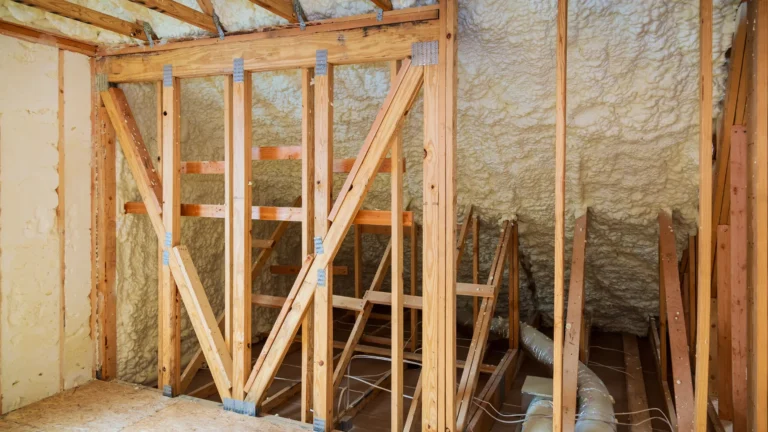
What Spray Foam Insulation Covers for Torrance Projects
On conversion and ADU work, the drawings usually establish the required R-value for each assembly, which makes the estimate a question of how to achieve it within the depth available. That calculation is where foam either earns its place or does not.
For homeowner projects without drawings, the assembly is assessed directly and both foam and conventional options are priced.
What the Assessment Covers
The assessment establishes whether foam is necessary before pricing.
- Required R-value versus available depth — The core calculation that determines whether closed cell is needed.
- Assembly construction — Rafter, joist, and stud depth are checked against the specification.
- Approved plans where available — Drawings are read so the scope matches what was permitted.
- Preparation requirements — Areas needing masking and protection are identified upfront.
- Conventional alternatives — Batt and blown-in options are priced where the depth allows them.
What the Installation Includes
Work follows a set sequence once scope is agreed.
- Sequencing with other trades — Foam goes in after rough-ins and before drywall, coordinated with the programme.
- Masking and protection — Adjacent surfaces and finished areas are covered before spraying begins.
- Application to specified thickness — Foam is applied to the depth the approved specification requires.
- Consistent coverage — Thickness is checked across the assembly, since inspectors verify depth directly.
- Cure time observed — Timing before the next trade can work is confirmed on site.
- Cleanup before handover — Waste and masking are removed so drywall can follow without delay.
How Spray Foam May Benefit Your Torrance Project
On a conversion, foam may be what makes the approved R-value achievable within the structure you already have. That is a practical benefit rather than a comfort one, because without it the assembly may not pass.
Comfort follows from the same property, since a sealed assembly in a small converted space may hold temperature considerably better than a gapped one.
What Torrance Property Owners and Builders Report
These are the outcomes that come up most often on foam projects.
- Required R-values achieved in limited depth — Closed cell may hit targets conventional material cannot.
- Sealed assemblies in small spaces — Conversions and ADUs may hold temperature more consistently.
- Coverage around services — Foam fills around wiring and pipes rather than being cut around them.
- Inspection readiness — Depth and coverage are what an inspector verifies before drywall.
- Fewer comfort issues after handover — Problems in a finished unit are expensive to correct retrospectively.
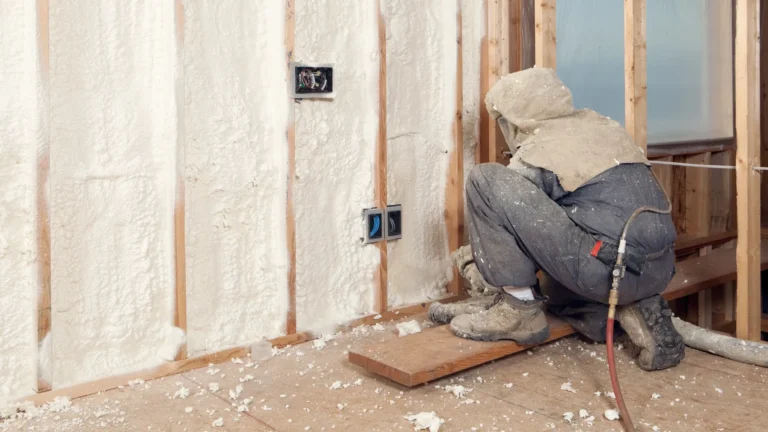
Spray Foam Insulation at Torres Insulation Inc.
On conversion and ADU work, timing matters as much as application. Foam sits directly in front of drywall on the programme, so a delay there pushes everything behind it.
Application quality is judged on consistency, since foam cannot be adjusted after curing and inspectors check depth directly. Thickness is verified across the assembly as work progresses.
Where the available depth allows a conventional system to meet the specification, that gets recommended instead. The company reports a 95% first-inspection pass rate across its projects.
Common Questions About Spray Foam Insulation in Torrance
How much does spray foam insulation cost in Torrance?
Cost depends on the area covered, foam type, required thickness, and access to the assembly. Closed cell generally costs more per square foot than open cell. Estimates are free, and where depth allows, conventional options are priced alongside.
Do I need spray foam for a Torrance garage conversion?
It depends on the R-value your approved plans require and the depth the existing structure offers. Garages frequently have shallow assemblies, which is why foam comes up often on these projects. The calculation is made against your specific drawings.
Can you quote spray foam for a Torrance ADU from plans?
Yes, and quoting from approved drawings produces a firmer number than a site description. Send the plans with the insulation specification and the scope will be priced against what was permitted. Anything unclear is raised as a question rather than assumed.
When should spray foam be installed during a Torrance conversion?
Foam goes in after framing, electrical, and plumbing rough-ins are complete and before drywall closes the assembly. It is usually inspected at that stage. Scheduling is coordinated around the other trades so the sequence holds.
Is open cell or closed cell better for a Torrance ADU?
Closed cell is generally specified where depth is limited and the required R-value cannot be reached otherwise. Open cell may suit assemblies where depth is not the constraint. The drawings and available depth determine the recommendation rather than a default preference.
Get Your Torrance Project Quoted
From the Plans
If a conversion or ADU is heading toward its insulation inspection, the useful step is a bid against the approved specification. Send the drawings and the estimate is free.