
Mineral Wool vs Fiberglass Insulation: Performance, Cost, and Applications
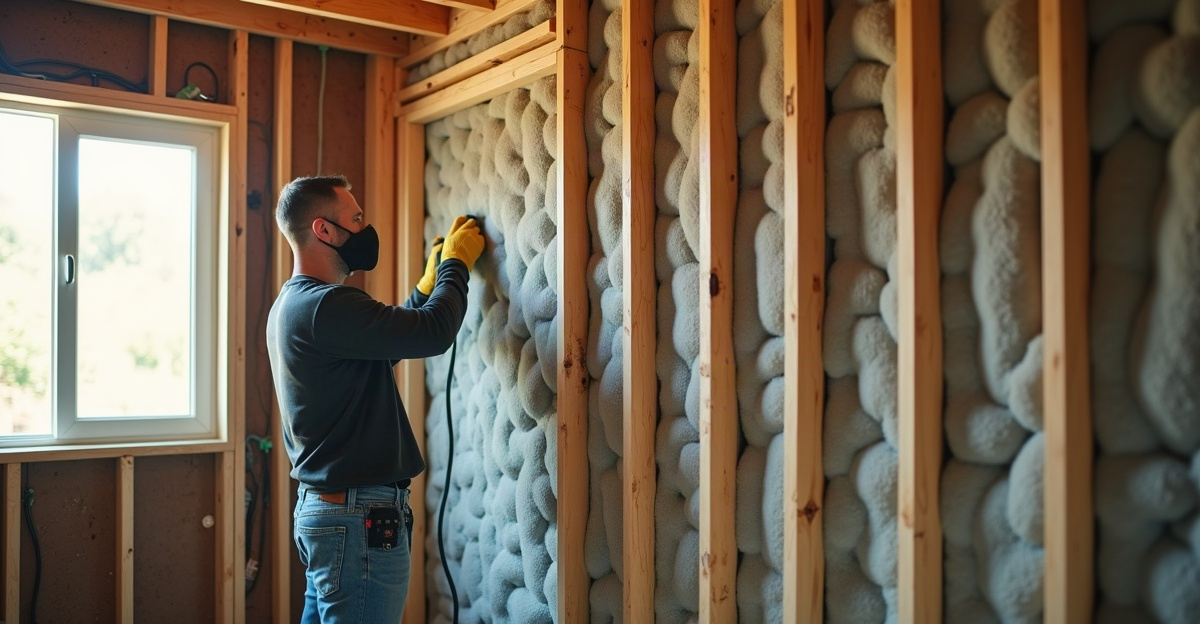
Mineral wool vs. fiberglass insulation depends on our required R-value, available cavity space, moisture conditions, sound-control goals, and budget. We often select mineral wool for water resistance, sound control, and noncombustible performance. Fiberglass usually offers a lower upfront-cost option for standard attics, walls, and ceilings.
Key Takeaways
- R-value measures resistance to heat flow. Full coverage, correct thickness, air sealing, and gap-free installation also affect insulation performance.
- We may choose mineral wool for shared walls, ADUs, offices, and commercial assemblies that require sound control, cavity fit, or fire performance.
- Fiberglass performs well in many standard residential walls, ceilings, and attics when we keep it dry and install it correctly.
- Neither material fixes leaks, condensation, drainage issues, or ventilation problems. We repair moisture sources before adding insulation.
- Total installed cost reflects access, removal needs, material thickness, framing, labor, and project requirements. Material price alone doesn’t determine the final cost.
Quick Comparison: What Fits Your Project?
Mineral wool and fiberglass can both be effective insulation materials. The right choice depends on the application, required R-value, available space, moisture conditions, sound-control goals, budget, and installation details.
Neither material is automatically better. For Southern California homes and commercial projects, we review the specific attic, wall, ADU, renovation, addition, or commercial assembly before recommending a material.
| Factor | Mineral Wool | Fiberglass |
|---|---|---|
| Thermal performance | R-value varies by product and thickness | R-value varies by product and thickness |
| Sound-control potential | Often considered for enhanced airborne sound control | Can help reduce airborne sound transmission |
| Moisture behavior | Valued for water resistance and drying potential in certain conditions | Performs well when kept dry and properly installed |
| Fire characteristics | Generally noncombustible | Fire performance varies by product, binder, facing, and tested assembly |
| Product forms | Commonly batts and rigid boards | Commonly batts and blown-in insulation |
| Installation fit | Useful where cavity fit, sound control, or fire requirements matter | Common choice for standard walls, ceilings, and attics |
| Relative material cost | Often higher in some applications | Often lower upfront for many standard applications |
| Common applications | Interior walls, shared walls, exterior walls, commercial assemblies | Attics, walls, ceilings, and standard residential assemblies |
Product specifications vary, and the full assembly matters.
R-value measures resistance to heat flow. It matters, but final performance also depends on complete coverage, proper depth or thickness, fitting around obstructions, avoiding gaps and compression, air leakage, and the overall wall, ceiling, or attic assembly.
“Rockwool” is often used generically in searches for mineral wool versus fiberglass insulation, but it can also refer to a brand. Mineral wool is the material category, and mineral wool products do not all perform the same way.
How Mineral Wool and Fiberglass Compare for Performance
Thermal performance starts with the required R-value and the space available. A deeper cavity can hold more insulation, while a shallow cavity may limit material thickness. Product-specific R-value per inch should guide the selection rather than a broad claim that one material always performs better.
Both mineral wool and fiberglass can support sound-control goals. Each can help reduce airborne sound transmission when installed within a complete wall or ceiling assembly. Mineral wool may be considered where enhanced sound control is a priority, such as an ADU, bedroom, office, or shared wall.
Insulation alone does not fully soundproof a room. Framing, drywall layers, resilient channels, sealing, doors, windows, penetrations, and other construction details all affect results. Soundproof insulation materials work most effectively as one part of a properly planned assembly.
Moisture conditions also deserve careful review. Mineral wool insulation benefits can include water resistance and the ability to dry in certain conditions. Fiberglass can also perform well when it stays dry and is installed correctly. Neither material fixes roof leaks, drainage problems, flashing failures, poor ventilation, condensation, or other moisture sources. We recommend finding and repairing the cause before adding insulation.
Mineral wool is generally noncombustible. Fiberglass products may also offer useful fire-performance characteristics, but performance varies by the product, binder, facing, and tested assembly. Neither insulation type makes a building fireproof or automatically fulfills the requirements of a fire-rated assembly.
Cost and Installation Quality: What Changes the Total Price and Results
Mineral wool often has a higher material cost in some applications. Fiberglass may offer a lower upfront material cost for many standard applications. That comparison is useful, but material price is only one part of the project cost.
Total installed cost varies based on insulation type and form, square footage, access, removal, preparation, framing, thickness, local requirements, project complexity, and labor. We do not publish fixed pricing without verified current local project details.
Batt insulation consists of pre-cut insulation sections installed between framing members. Our batt insulation services can fit many wall and ceiling projects where open framing provides clear access.
Blown-in insulation is loose insulation installed to provide coverage and depth, often in attics. For an existing home, attic insulation services can address insulation depth, access limitations, and current attic conditions.
Air sealing means closing gaps and openings that allow conditioned air to escape or outside air to enter before insulation is installed where appropriate. This work may be needed around penetrations, framing transitions, and accessible openings. The purpose of insulation involves slowing heat flow, but air leaks can still affect indoor comfort and system workload.
Installation quality directly affects performance. Batts should fit snugly without excessive compression. Cavities need full coverage, and gaps around wiring, pipes, and framing need appropriate attention. Required clearances must remain in place. Air leaks may need sealing before new insulation goes in.
Comfort and efficiency outcomes depend on the property, HVAC system, air leaks, duct condition, insulation levels, and installation quality. We assess these conditions rather than promise a specific energy savings or utility-bill reduction.
Closed-cell spray foam is a rigid foam insulation that can provide insulation and air sealing in certain applications. It is a separate material option from mineral wool and fiberglass, and it may be appropriate only where the assembly and conditions support its use.
Where Each Material May Fit: Attics, Walls, ADUs, and Commercial Work
Attics need a project-specific review. Existing insulation level, attic access, target R-value, air sealing needs, cleanup or removal needs, and available depth can all influence the choice. In Los Angeles County, Orange County, and areas near Riverside, attic heat and uneven indoor comfort are common concerns. The right material and installation method depend on what the attic allows and what the property needs.
Exterior walls and renovations require a close look at framing depth, cavity fit, moisture details, access before drywall, local plans, and the desired R-value. Fiberglass often works well in standard framing cavities. Mineral wool may fit projects where sound control, fire requirements, or product-specific characteristics influence the assembly.
Interior walls, ADUs, and shared walls often place more emphasis on sound control. Mineral wool may be considered where enhanced airborne sound control is a priority. Still, insulation by itself will not fully soundproof an ADU or shared wall. Doors, windows, drywall, framing, and sealing all matter.
Commercial and multifamily insulation projects should follow plans, specified assemblies, fire requirements, acoustic goals, schedules, and local code requirements. Material availability and recommended R-values vary by application. Our commercial insulation team can review the stated scope and support inspection-ready installation practices.
Existing or damaged insulation needs evaluation before new material is installed. Removal or cleanup may be appropriate where there is odor, pest activity, contamination, moisture evidence, or a need to access and correct underlying repairs. These services are not automatic add-ons. We recommend them only when the existing conditions support the need.
For homeowners planning additions or renovations, our residential insulation services can help match the insulation approach to the actual framing, access, and project goals.
Questions to Ask Before Choosing Insulation
These questions help define the right scope before selecting mineral wool or fiberglass:
- What R-value does this attic, wall, or assembly need?
- How much space is available for insulation depth or thickness?
- Is sound control a priority, such as for an ADU, bedroom, office, or shared wall?
- Are there signs of roof leaks, condensation, pests, damaged insulation, or ventilation issues?
- Will old insulation need removal, or can it remain?
- Does the project have plan specifications, local code requirements, or a tested assembly requirement?
- Is air sealing recommended before installing new insulation?
When an On-Site Evaluation or Plan Review Helps
Photographs and general comparisons cannot fully assess attic access, insulation depth, existing conditions, moisture evidence, ducts, framing, electrical obstructions, or commercial plan requirements. An on-site review provides a practical way to determine the scope. It is not an automatic upsell.
Torres Insulation Inc. has been family-owned since 2020. We bring residential and commercial insulation experience, free estimates, clean job sites, clear communication, and flexible payment options to each project. Our insulation installation process starts with the existing conditions and the work required.
For construction professionals, Submit Your Project Plans for review of specified assemblies, access, scope, and installation requirements.
Common Mineral Wool vs. Fiberglass Questions
Is mineral wool better than fiberglass insulation?
Neither material is automatically better. The right choice depends on the location, insulation target, space available, moisture conditions, sound-control priorities, budget, and installation details.
Is mineral wool more expensive than fiberglass?
Mineral wool often has a higher material cost in some applications. Total installed cost depends on material form, access, removal, framing, thickness, labor, local requirements, and project complexity.
Which insulation is better for sound control?
Both can help reduce airborne sound transmission. Mineral wool may be considered for enhanced sound-control needs, but walls and ceilings need a complete assembly to improve results.
Can mineral wool or fiberglass get wet?
Mineral wool can be valued for water resistance and drying potential, while fiberglass should be kept dry and correctly installed. In either case, repair leaks and moisture sources before insulating.
Is mineral wool fireproof?
Mineral wool is generally noncombustible, but insulation does not make a building fireproof or automatically meet every fire-rated assembly requirement.
Which insulation is better for an attic?
The appropriate choice depends on current insulation level, target R-value, access, available depth, air sealing needs, and whether removal or cleanup is needed.
Should old attic insulation be removed before adding new insulation?
Not always. Removal may be appropriate when there is damage, contamination, odor, pest activity, moisture evidence, or a need to access and correct underlying conditions.
For mineral wool versus fiberglass guidance based on the actual space, insulation target, access, existing insulation condition, and project requirements, Request a Free Estimate. Construction teams can submit project plans for a review of the specified installation scope.