
Soundproof Insulation for Walls: Materials That Help Reduce Noise
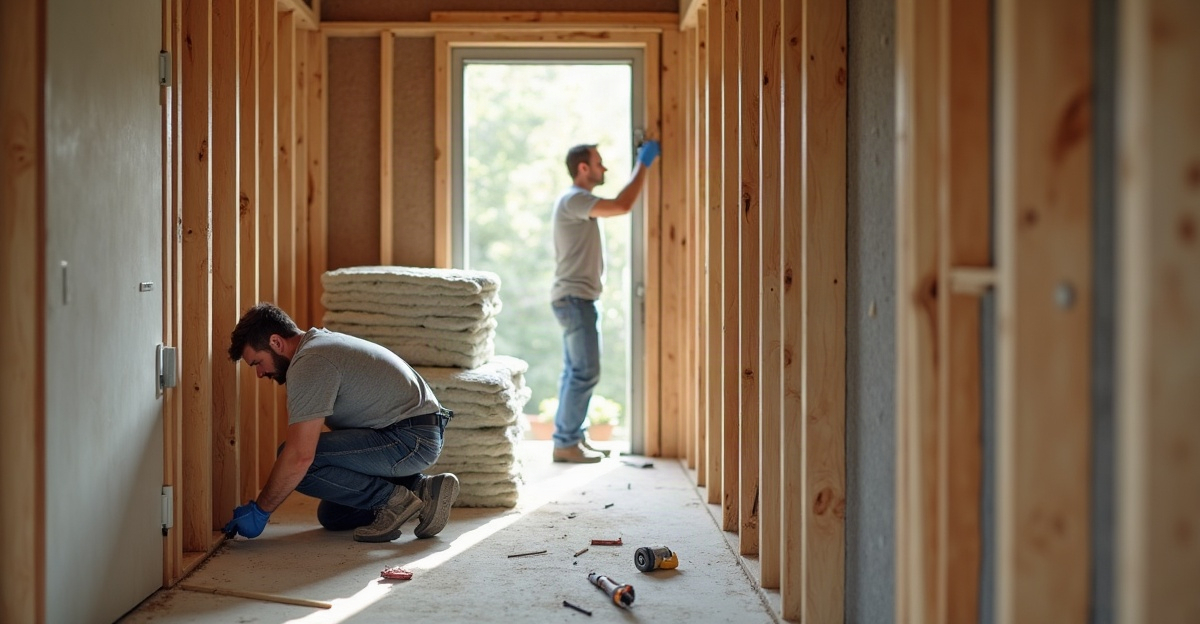
Soundproof insulation for walls can reduce airborne noise, including voices, TV, traffic, and music. It absorbs sound within wall cavities. Fiberglass, mineral wool, cellulose, and spray foam fill different needs. We recommend pairing insulation with sealed gaps, controlled openings, and the right wall assembly for stronger noise control.
Key Takeaways
- Insulation reduces airborne sound, but it doesn’t fully block vibration or structure-borne noise from plumbing, framing, machinery, or slamming doors.
- Fiberglass and mineral wool work well in open wall cavities. Cellulose can suit some finished-wall retrofit projects.
- Spray foam improves air sealing and thermal performance, but it doesn’t solve every sound-control issue.
- R-value measures resistance to heat flow, not soundproofing performance. Sound Transmission Class (STC) measures a tested, complete wall assembly.
- Doors, windows, ducts, outlets, plumbing penetrations, and perimeter gaps can let sound bypass an insulated wall. We recommend addressing these paths during installation.
What Wall Insulation Can and Cannot Do for Noise
Soundproof insulation for walls helps reduce airborne noise, but insulation alone does not create a fully soundproof wall. It can improve sound control when the wall assembly, openings, and installation details support the same goal.
Airborne noise includes voices, television, music, traffic, barking, and similar sounds that travel through the air. Insulation for soundproofing absorbs part of that sound inside an open wall cavity, which can limit how much sound reaches the other side.
Impact or structure-borne noise moves through solid materials. Footsteps, vibration, slamming doors, plumbing vibration, and machinery can travel through framing, pipes, and other building components. Wall-cavity insulation may help in some cases, but it will not solve every structure-borne noise issue.
Sound absorption reduces echo or reverberation within a room. Sound blocking, also called transmission control, limits sound traveling between rooms or units. These functions overlap, but they are not the same.
Noise can also travel around a wall through doors, windows, HVAC openings, ducts, outlets, and plumbing penetrations. These are flanking paths. Results depend on wall construction, installation quality, openings, and the type of noise involved. For a broader overview of insulation’s role in a building, review the main purpose of insulation.
Wall Insulation Materials: Fiberglass, Mineral Wool, Cellulose, and Spray Foam
Different materials can provide noise reduction insulation, but each fits a different wall condition, budget, and installation method. R-value measures resistance to heat flow, not soundproofing performance.
| Material | Sound-Control Role | Wall Applications and Installation | Moisture, Fire, and Budget Considerations | Thermal Performance |
|---|---|---|---|---|
| Fiberglass | Can help reduce airborne noise when installed without gaps, compression, or voids. | Common for open stud walls and new construction. Batt installation works well where cavities are accessible. | Project details should account for moisture conditions and required fire-rated assemblies. Often a practical budget choice. | Provides thermal insulation along with sound absorption. |
| Mineral wool | Dense material that can absorb airborne sound in wall cavities. | Often used in open walls, renovations, multifamily work, and commercial projects. | May fit projects with specific fire or moisture considerations, but cost, wall depth, and assembly design still matter. | Provides thermal insulation, though R-value alone does not determine sound performance. |
| Cellulose | May help fill cavities and reduce airborne sound paths in suitable retrofit work. | Can work for finished-wall cavity fills when access, cavity condition, and installation method allow it. | Requires careful moisture management and planning for existing obstructions. Budget varies with access and repair work. | Provides thermal insulation in addition to cavity fill. |
| Spray foam | Can support air sealing, but it is not a universal soundproofing solution. | Used in open walls and some retrofit conditions, depending on foam type and access. | Material selection must account for moisture conditions, fire-related requirements, and assembly design. Cost can be higher. | Can provide strong thermal insulation and air-sealing support. |
Fiberglass should not be dismissed simply because mineral wool is denser. Well-installed fiberglass wall insulation can improve sound control in many standard wall assemblies. Compare material differences in our guide to mineral wool vs. fiberglass insulation.
Mineral wool soundproofing is often a strong option for cavity walls, but it is not automatically the right selection for every budget, wall depth, moisture condition, or construction type. Cellulose may suit certain retrofits; see how cellulose and fiberglass compare. Spray foam can support air sealing and thermal goals, yet the noise source and complete assembly should guide the recommendation.
Not sure which wall insulation fits your project? Request a Free Estimate.
Why the Complete Wall Assembly Controls Sound
Wall assembly details matter as much as the insulation itself. Insulation fills the cavity, but sound can still move through gaps, framing, penetrations, and openings.
Electrical boxes, especially back-to-back outlets, can create direct sound paths. Plumbing lines, ducts, recessed openings, access panels, and perimeter gaps can do the same. Sealant at wall edges and penetrations helps limit these paths when the assembly calls for it.
Drywall adds mass to a wall. Thicker drywall or additional drywall layers can improve transmission control when installed as part of an appropriate design. Framing can also carry vibration directly from one side of a wall to the other. In suitable projects, resilient channels and decoupling methods reduce this direct vibration transfer.
Doors, windows, and HVAC openings deserve equal attention. A well-insulated wall can still seem ineffective if sound travels around it through nearby flanking paths.
Sound Transmission Class, or STC, is a rating for a tested wall assembly, not an insulation product alone. A stated STC rating should match the tested wall assembly’s materials, framing, drywall, seals, and construction details.
Choosing an Approach for Open Walls and Existing Walls
Open stud walls provide the most options. We can address insulation, wiring, plumbing, air gaps, drywall layers, and decoupling details before the wall is closed. This approach works well for new construction, a renovation, ADU work, multifamily projects, and many commercial projects.
Finished walls need a more focused plan. Adding material may require drywall access, removal and replacement of finishes, or a project-specific cavity-fill method. Existing insulation, blocking, wiring, pipes, moisture conditions, and cleanup needs all affect the approach.
Our guide to insulating existing walls explains common retrofit considerations. For accessible cavities, comparing blown-in and batt insulation can also clarify the practical differences.
A finished wall may need more than added insulation if outlets, ducts, plumbing, doors, windows, or framing carry the main noise path. Requirements can vary across Southern California based on location, wall type, occupancy, fire-rating needs, permit scope, and existing conditions.
How to Select Insulation for Your Noise Problem
Start with the source. Conversations, television, traffic, and adjacent-room noise are usually airborne. Plumbing vibration, machinery, slamming, and vibration through framing often involve structure-borne sound.
Next, identify whether the wall is open or finished. Then check nearby doors, windows, ducts, outlets, plumbing, recessed openings, and access panels. These details often reveal why a wall alone is not controlling the noise.
Keep thermal goals separate from acoustic goals. R-value is not a soundproofing rating. Moisture conditions, fire-rating requirements, permits, wall depth, and budget also affect the right system.
For renovations, ADUs, multifamily work, or commercial plans, a site assessment or plan review can identify sound paths and practical installation options. We provide residential insulation services and can review project conditions before work begins. Schedule an Appointment to discuss soundproof insulation for walls and noise reduction insulation options.
Questions to Ask Before Choosing Wall Insulation
What type of noise needs attention: voices, TV, music, traffic, barking, plumbing, machinery, or vibration? Is the sound moving through the wall, around the wall, or through framing, ducts, outlets, doors, windows, or plumbing?
Is the wall open, or will the work require drywall access and finish replacement? Does the project also need thermal insulation, moisture management, fire-rating details, permits, or occupancy requirements?
Ask what installation method is proposed and what the estimate includes for preparation, access, protection, cleanup, and finish repairs. The recommendation should reflect the existing wall condition and the actual source of noise.
For a tested assembly, ask which materials and construction details support the stated STC rating. No contractor should promise inspection approval, code compliance, project timelines, energy savings, price matching, or exact acoustic results for every condition.
We bring clear communication, clean job-site practices, residential and commercial experience, flexible payment options, free estimates, and project-plan review to each project. For additional guidance, review our insulation FAQs. For renovations, ADUs, multifamily work, or commercial projects, submit your project plans for a practical insulation recommendation.